
As an Amazon Associate I earn from qualifying purchases. Purchases through our links may earn us a commission at no extra cost to you.
Fine usage scratches on a plain stainless steel sink are different from a removable deposit, a deep gouge or damage to a colored finish. Identify the surface before buying a scratch-removal kit or replacing the sink. Scrubbing harder can change the finish around a mark without solving the original problem.
The satin stainless KRAUS KHU100-32 is the reference model here. These instructions are not a blanket treatment for gunmetal PVD, painted, enameled, composite or specially patterned sinks. A product sold as “stainless steel” can still have a surface that needs different care.
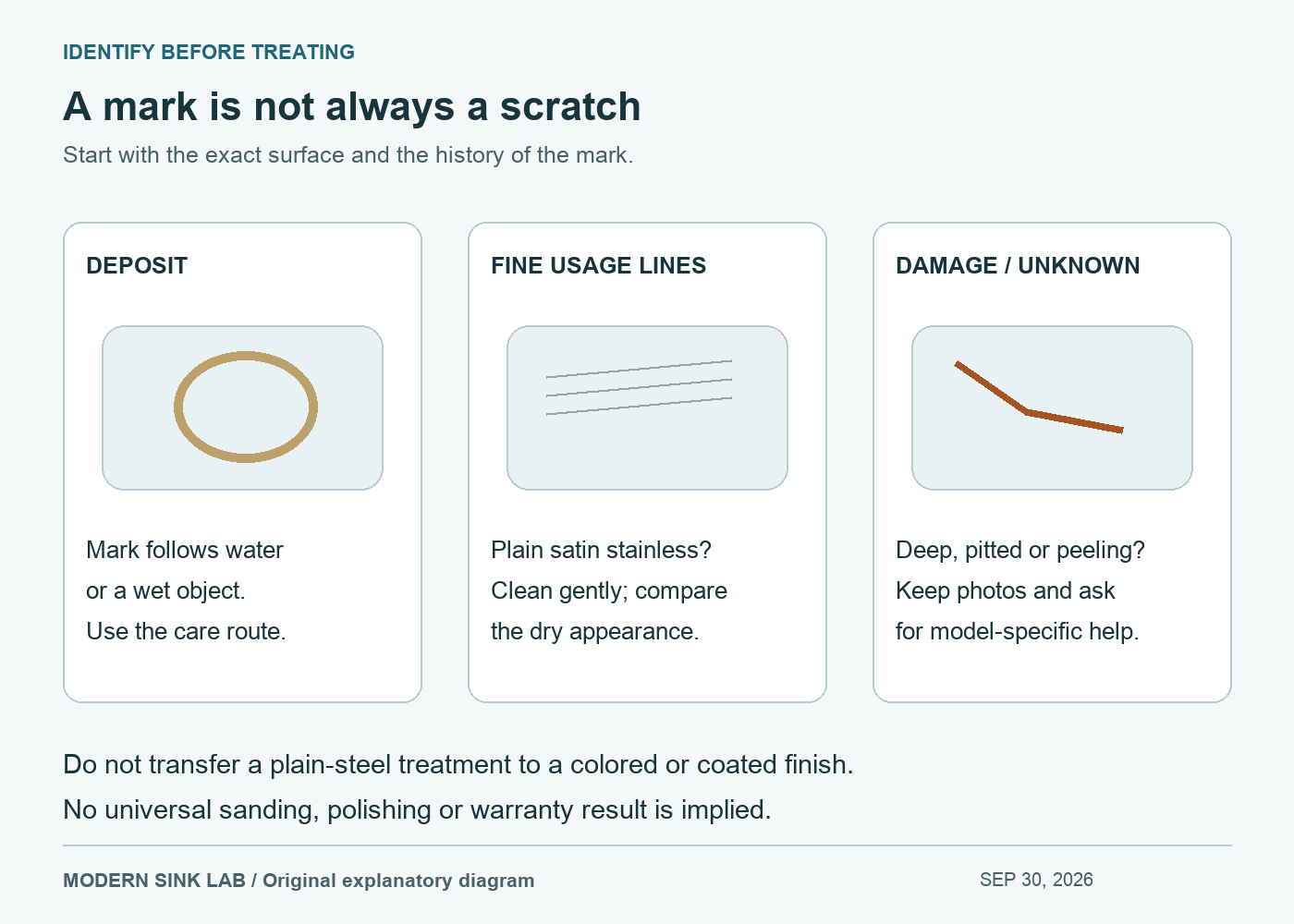
Start with the mark’s history
| Observation | First useful question | Next step |
|---|---|---|
| Pale or rust-colored mark, possibly raised | What was left in contact with the surface? | Follow the deposit-care route before calling it a scratch |
| Fine lines after ordinary utensils or pans | Is this plain satin stainless, and is the grain still visible? | Clean gently and assess the dry appearance |
| A sharp gouge, pit, peeling area or distorted metal | Was there an impact or an aggressive cleaning treatment? | Photograph it and request model-specific assessment |
A line left by a sliding pan can look very different when wet or under a bright worktop light. Take one photograph of the whole bowl and a close view with the sink dry. Keep the angle and lighting consistent if you compare the result after cleaning. Do not use a blade or abrasive pad as a “test” of whether the mark is deep.
If the mark follows a water outline or an object that stayed wet in the bowl, use our rust-colored spots and mineral-deposit guide. Removing a deposit and altering the steel’s finish are different jobs.
What KRAUS actually says about fine scratches
KRAUS’s stainless-steel care section describes ordinary surface scratches as common and says they can blend into the finish with use and proper cleaning. It discusses softening minor marks with specific non-scratch pads and a compatible cleaning product. That is not a promise to erase every line or restore a factory finish.
The same section warns against abrasive powders, abrasive pads, steel wool, wire brushes and harsh chemical ingredients. A familiar brand name on a cleaner or pad is not enough: formulations and grades differ. If you cannot match the exact product and your finish to the current guidance, ask KRAUS before attempting scratch treatment.
For the initial clean, its routine is a soft sponge with mild ammonia-free liquid soap, followed by rinsing and drying. Keep the first pass gentle. Do not combine cleaners or improvise a sequence of stronger chemicals.
Why a repair kit can create a larger visible patch
Before changing a small area, consider what a successful result would mean. Is the aim to remove a deposit, make a fine line less noticeable, or recreate a uniform brushed finish? Those are different targets. A shiny patch in the middle of a satin bowl may be more noticeable to you than the original line.
Do not choose sandpaper grit, a powered buffer or a refinishing compound from this guide: we have not verified a universal procedure for those methods. For a new sink, preserve the purchase details and photographs before altering the surface. Ask the manufacturer what it recommends for that precise model and whether the proposed treatment affects its assessment.
For the circular-brushed Dex surface, consult the KA1US33B finish and grid-care guide. Do not assume that creating straight brushing in one patch will match a different factory pattern.
Reduce repeat contact rather than chasing every line
Look at the action that produced the mark. Lift a heavy pan instead of dragging it across the floor. Inspect a grid’s feet and bumpers before returning it to the bowl, and remove debris trapped underneath. A protector with missing feet should not be treated as reliable surface protection.
Choose a grid by exact bowl fit and drain position, not the exterior sink width. Our grid-measuring guide explains the measurements. Keeping utensils off the floor can reduce direct contact; it does not make the walls, rim or exposed areas scratch-proof.
Buying a new sink: set the right expectation
The KHU100-32 is a conventional 32-inch undermount stainless bowl supplied with a bottom grid. Its 16-gauge steel describes sheet thickness, not a scratch-proof skin. Choose it for a suitable bowl and installation, with an appearance that you are willing to maintain—not because a thicker model is promised to stay unmarked.
Check KHU100-32 and included grid on Amazon
It specifies a 36-inch minimum cabinet, and the actual cutout and plumbing still need approval. Existing owners should assess a usable sink before spending on a replacement. If a pristine surface after everyday metal-pan contact is essential to you, inspect real installed finish samples and discuss maintenance expectations before buying any material.
Research scope: KRAUS Stainless Steel Kitchen Sinks care guidance, KHU100-32 product information and specification, and selected US listing checked September 30, 2026. We have not tested a scratch-removal product, inspected your sink or made a warranty determination.