
Research guide by Modern Sink Lab. Reviewed September 28, 2026. Based on manufacturer documentation; no hands-on product testing.
Affiliate disclosure: As an Amazon Associate I earn from qualifying purchases.
Water on the cabinet floor does not establish that the sink needs replacing. Moisture may come from a plumbing connection, the countertop joint, an appliance hose or condensation on a cold surface. The useful first question is where the water appears first, not where it finally collects.
Stop using a visibly leaking fixture and keep clear of wet electrical equipment. For a small, unexplained damp patch, the observations below can help an installer find the source. They are clues, not a remote diagnosis or instructions to dismantle plumbing.
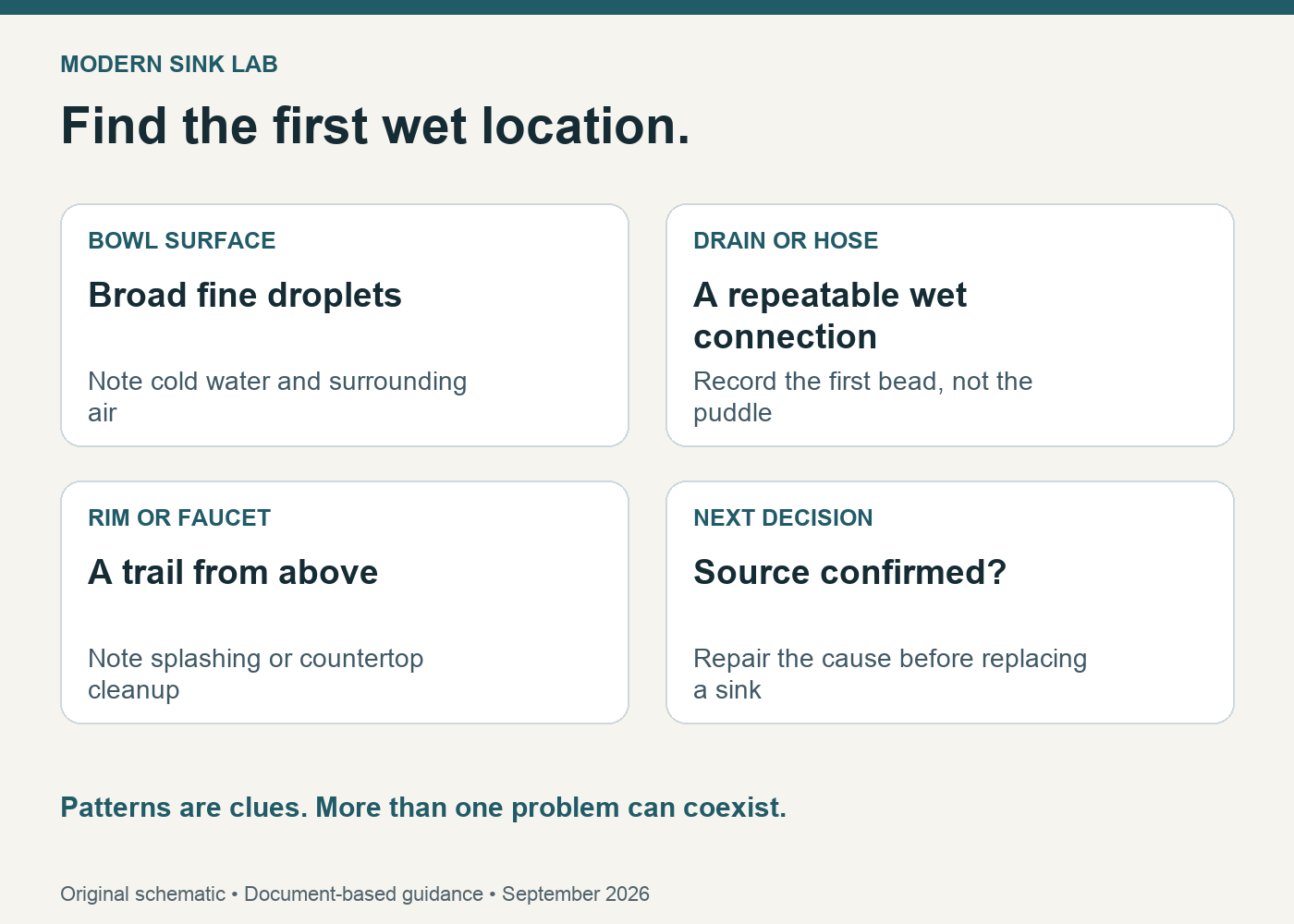
Separate three observations
- Many small droplets spread over the outside of a cold bowl
- This pattern is consistent with condensation, particularly when warm, moist air meets a chilled surface. It does not rule out a separate leak. Note whether a cold pipe is also wet and whether the droplets appear away from joints.
- Water repeatedly starts at one fitting
- A wet drain connection, supply connection or hose deserves direct inspection. Water can run along a pipe before falling, so the drip directly above the puddle may not be the original source.
- A trail begins near the rim or faucet
- Note whether it follows splashing or wiping the counter. The sink-to-counter seal and faucet area need different attention from the drain below.
Make a short observation record before the visit
Remove dry stored items that obstruct the view, photograph the existing moisture and dry only surfaces you can safely reach. Record what was happening immediately beforehand: a basin of cold water, normal draining, countertop cleanup, dishwasher operation or no use at all. Avoid deliberately flooding the rim or repeating a leak to make it show up.
At the next safe, ordinary use, note the first wet location and elapsed time. One useful entry is “drain collar dry before use; bead appeared there while draining.” Another is “fine droplets across bowl underside after cold water stood in it; joints appeared dry.” Neither statement claims a cause. Both are more useful than “cabinet leaks sometimes.”
If water appears while everything is unused, include that fact too. Do not assume the bowl is responsible just because it occupies most of the cabinet. Persistent moisture, swelling or an inaccessible source calls for inspection rather than a new layer of liner hiding the evidence.
What factory undercoating does—and what it cannot fix
Sink manufacturers use underside coatings and pads for functions that can include sound reduction and condensation control. Franke describes these functions in its sink FAQ; KRAUS identifies insulating undercoating on the KHU100-32. These are manufacturer descriptions, not comparative moisture tests performed by us.
A coating is not a repair for a loose drain connection or a failed rim seal. It also does not establish that every cabinet will remain dry under every temperature and humidity condition. Ask which surface is wet and which component failed before choosing a remedy.
Do not start by spraying an unknown foam or coating under an installed sink. Covering fittings, labels or attachment points can make inspection and later service harder. If an existing coating is loose or damaged, send the manufacturer photographs and ask about the appropriate repair and warranty implications for that model.
When an insulated replacement is worth comparing
If inspection establishes that the sink itself needs replacement, compare the underside construction as well as bowl size. The KRAUS KHU100-32 is one conventional stainless option with factory undercoating and sound-dampening pads. The linked variant is the 32-inch, 16-gauge undermount single bowl, not the separately listed 18-gauge version.
It suits a buyer wanting a large open bowl and documented underside treatment, provided the cabinet, cutout and mounting system fit. Its important limitation here is simple: it cannot repair moisture coming from another component. Do not replace a serviceable sink solely because this model advertises condensation protection.
Before ordering, use our cabinet and sink-size checklist. The KHU100-32 specification calls for a 36-inch minimum cabinet, and the outer dimensions alone do not confirm compatibility with an existing opening.
What to ask the installer to confirm
- Which component is the first source of water?
- Is there one problem or more than one?
- Can the existing sink remain in place for the repair?
- Does the mounting arrangement or rim seal need attention independently?
- What observation after the repair would show that the original issue has stopped?
Keep the cabinet visible during the agreed follow-up check. A new waterproof mat may contain a little water, but it does not prove the source has been fixed. Inspect the same locations and conditions recorded before the repair.
If the concern is orange marks inside the bowl rather than moisture underneath, use the separate stainless sink surface-stain guide. Surface care, attachment and plumbing are different buying and maintenance decisions.
Research basis: KRAUS KHU100-32 product documentation and specification sheet; Franke sink FAQ, checked September 28, 2026. Observation workflow is editorial guidance, not a tested diagnostic method.